Mixela
September 3, 2026
A Midtown Phoenix Hidden Gem Where Global Flavors Come Together
Some restaurants are easy to explain.
Italian. Japanese. Mexican. French. Steakhouse. Seafood.
You hear the category and immediately have a general idea of what you're going to find on the menu.
Mixela isn't really one of those restaurants.
And after spending an evening here, I realized that's actually one of the things I like most about it.
Located on 24th Street in Midtown Phoenix, Mixela is a small, intimate restaurant built around crudos, tapas, sushi, seasonal ingredients, and globally inspired small plates. On any given menu, you might find influences from Venezuela, Peru, Italy, Spain, Japan, Mexico, or somewhere else entirely.
That could easily become confusing in the wrong hands. A menu that jumps between continents can sometimes feel like a restaurant hasn't quite figured out what it wants to be.
At Mixela, the opposite is true.
Once you understand the story behind Chef Gian Franco Brugaletta and co-owner Valentina Huerta, the menu starts making perfect sense. Rather than trying to fit into a particular cuisine, Mixela reflects the places they've lived, the kitchens they've worked in, the food they've grown up eating, and the techniques they've collected throughout their careers.
It's less about "fusion" and more about perspective.
Chef Gian Franco was born in Venezuela and raised within a Sicilian community. He studied cooking in Italy, worked in an acclaimed seafood-focused kitchen on Italy's Adriatic coast, and later spent years working with sushi and Asian cuisine in Monaco. Valentina was born in Mexico, studied culinary arts in Arizona and Monaco, and built her own career in hospitality. Together, their experiences stretch across Latin America, Europe, Asia, and eventually Arizona.
Mixela brings all of that together.
Even the restaurant's name hints at the idea. It comes from the Italian word "miscela," meaning a mix or blend, and that's exactly what the restaurant represents.
It's a mix of cultures.
A mix of experiences.
A mix of techniques.
And a mix of dishes that probably wouldn't make sense together anywhere else.
The menu also changes frequently based on seasonality and ingredient availability, which means a visit to Mixela isn't necessarily going to look exactly like someone else's visit a few months earlier. The dishes I tried might evolve, disappear, or eventually be replaced by something completely different.
There are, however, a few dishes that have apparently become difficult to take off the menu.
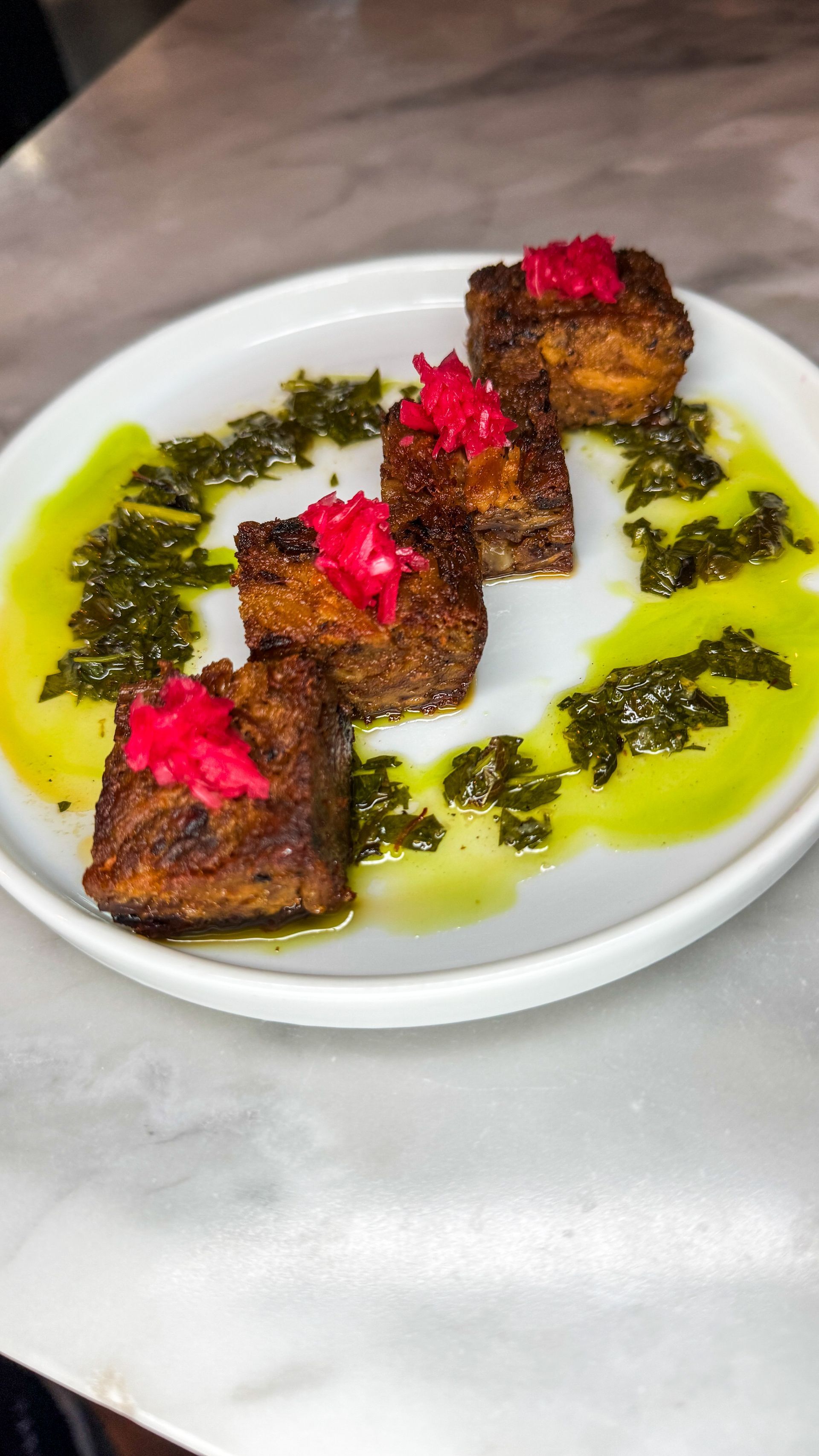
After trying the Pork Short Rib Bites, I understand why.
This is exactly the kind of hidden gem in Arizona I love finding: a small neighborhood restaurant doing something personal and different without trying to force itself into an easy category.
Finding Mixela in Midtown Phoenix
Mixela sits at 3410 N. 24th Street, just north of Osborn Road in central Phoenix.
It's not located inside one of the Valley's giant entertainment districts. There isn't a sprawling resort surrounding it or a row of flashy restaurants competing for attention next door.
Instead, Mixela feels like a neighborhood restaurant.
That's intentional.
Gian Franco and Valentina have talked about wanting to create a gathering place for the surrounding community, and the restaurant's scale plays directly into that idea. The dining room is intimate, the kitchen is small and open, and there's very little separation between the people preparing the food and the people eating it.
You can actually see the chef working.
That detail matters more than you might expect.
There is something different about watching the person responsible for your dinner prepare dishes just a few feet away. It removes some of the invisible barrier that normally exists between the dining room and kitchen.
Instead of feeling like food is simply appearing from somewhere behind a wall, you can see the process.
It makes the experience feel more personal.
And that's really the overall atmosphere at Mixela.
Personal.
Warm.
Relaxed.
This isn't a restaurant that needs a huge dining room or over-the-top design to make an impression. The intimacy is part of the charm. It feels much closer to being invited into someone's home for dinner than walking into a massive restaurant operation.
That atmosphere also makes sense when you consider the menu.
Mixela isn't built around individual entrées where everyone orders one dish and stays in their own lane. It's designed around sharing.
Order some crudo.
Add a few small plates.
Try a roll.
Have some wine.
Order another plate because something caught your attention.
That's the rhythm.
The meal can be as small or as elaborate as you want it to be.
You could stop in for a glass of wine and something to snack on, or you could build an entire dinner by working your way through different parts of the menu.
I definitely recommend the second approach if it's your first visit.
Understanding the Idea Behind Mixela
The more I learned about Mixela, the more I realized that trying to label it actually misses the point.
Calling it a tapas restaurant doesn't fully explain it.
Calling it a sushi restaurant definitely doesn't.
Calling it Latin American doesn't work either.
"Globally inspired" gets closer, but even that sounds more conceptual than what is actually happening here.
The menu is essentially Chef Gian Franco's culinary history translated onto plates.
He was born in Venezuela, which helps explain dishes like the arepas and the Latin American influences that run throughout the menu. His Sicilian background and culinary education in Italy naturally bring European technique into the equation.
His professional experience adds another layer.
After training in Italy, he worked at La Madonnina del Pescatore, Chef Moreno Cedroni's acclaimed seafood restaurant on Italy's Adriatic coast. That environment placed a strong emphasis on seafood and crudo.
Later, Gian Franco moved to Monaco and eventually spent years as the executive sushi chef at Buddha-Bar Monte-Carlo.
Suddenly, the menu at Mixela becomes much easier to understand.
Sea bass ceviche beside yellowtail aburi isn't random.
Arepas beside tuna maki aren't random.
Italian technique beside Japanese precision isn't random.
They're pieces of the same person's story.
And I think that's what separates Mixela from restaurants that simply combine cuisines because fusion sounds interesting.
There's a reason behind the combinations here.
These are foods and techniques connected to the chef's actual life.
Valentina brings another layer to that identity. Born in Mexico and having spent significant time in Europe, her hospitality background helps shape the restaurant's atmosphere and beverage program.
The result feels less like someone sat in a conference room and developed a "global tapas concept" and more like two people built a restaurant around the foods and experiences that shaped them.
That's a much more interesting story.
A Seasonal Menu That Doesn't Stand Still
Another defining feature of Mixela is that the menu changes.
The restaurant operates with a small kitchen and limited cold storage. Instead of relying on a giant walk-in refrigerator filled with ingredients, the team receives fresh produce and seafood frequently and builds the menu around what's available.
That forces creativity.
It also means seasonality isn't just something written in the restaurant description because it sounds good.
It directly affects what's being served.
For diners, that creates an interesting trade-off.
If you fall in love with something, there's always a possibility it won't be there forever.
But that's also what makes returning more interesting.
A visit during one season might look completely different from a visit several months later.
The restaurant can respond to ingredients rather than forcing the same menu year-round.
There are exceptions.
Some dishes become so popular that removing them becomes difficult.
The Pork Short Rib Bites are one example, and after trying them, I can understand why guests would be upset if they disappeared.
But generally, Mixela rewards curiosity.
You have to be willing to see what's available.
For me, that's part of the fun.
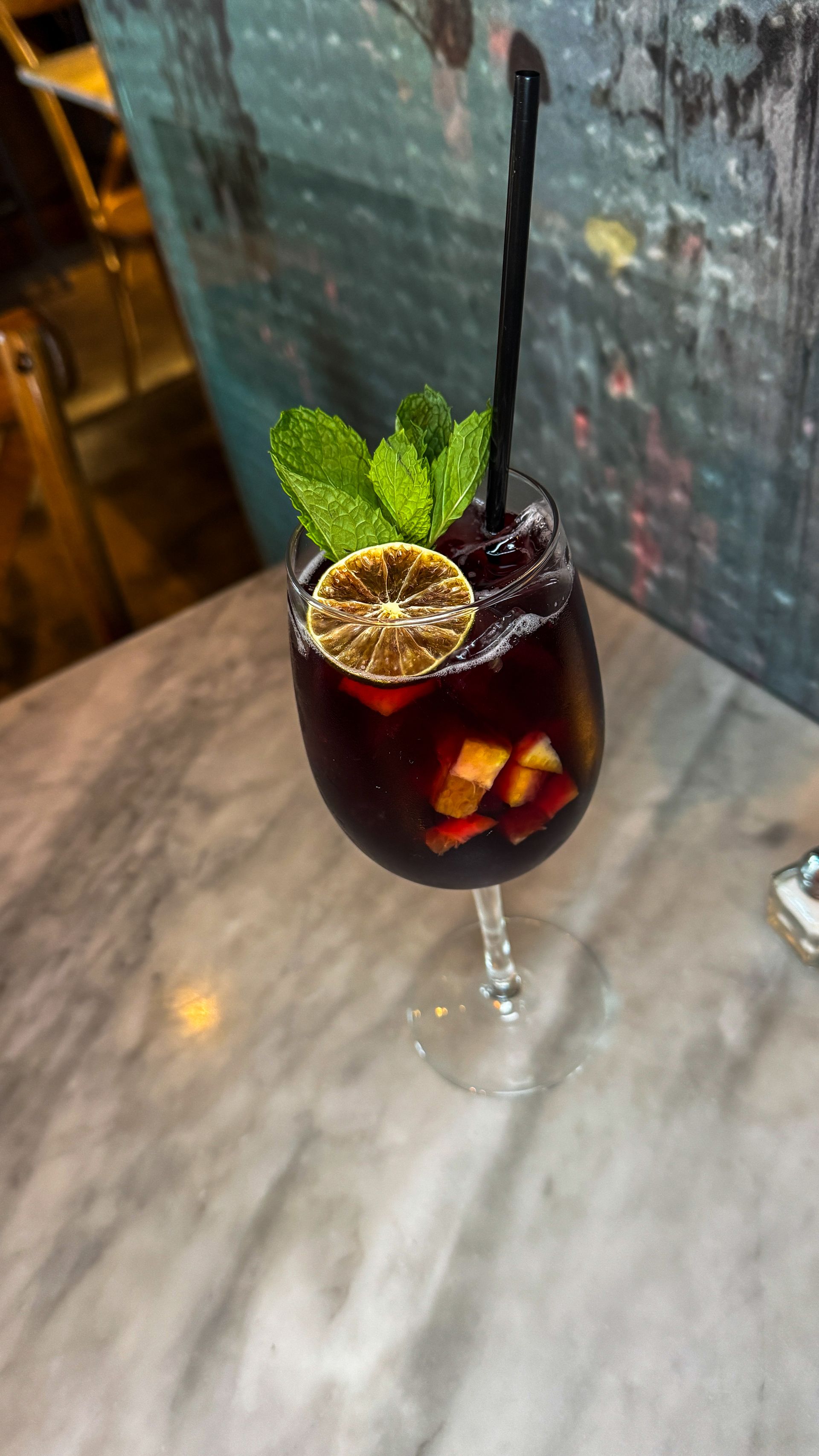
Start with the Sangria
And I'm glad I did because this ended up being one of the highlights of my visit.
There's something about sangria and a table full of small plates that just makes sense.
It's refreshing enough to work alongside seafood, fruity enough to complement some of the brighter flavors on the menu, and easy enough to sip throughout a long dinner without dominating the food.
Mixela's sangria checked all of those boxes.
It was fruity and refreshing without becoming overly sweet, which is always the risk with sangria. You still want it to feel like a wine-based drink rather than fruit punch, especially when you're pairing it with food.
This one had that balance.
And because the menu moves between so many different flavor profiles, having a versatile drink ended up being particularly useful.
One minute I was eating bright Peruvian-style ceviche.
Then I was moving into yellowtail and fermented yuzu.
Then chicken and avocado arepas.
Then rich pork short ribs and chimichurri.
The sangria worked across all of it.
Mixela also puts real thought into its broader beverage program. The restaurant embraces the idea of the European aperitivo: drinks designed not simply to deliver alcohol, but to stimulate the appetite and encourage people to sit, snack, and socialize.
You'll find wine, cocktails, sake, local beer, and non-alcoholic options depending on the current offerings.
That variety reinforces the idea that Mixela can become whatever kind of evening you want.
Stop in for wine and a few bites.
Come for date night.
Meet friends and order half the menu.
There's no single correct way to experience it.
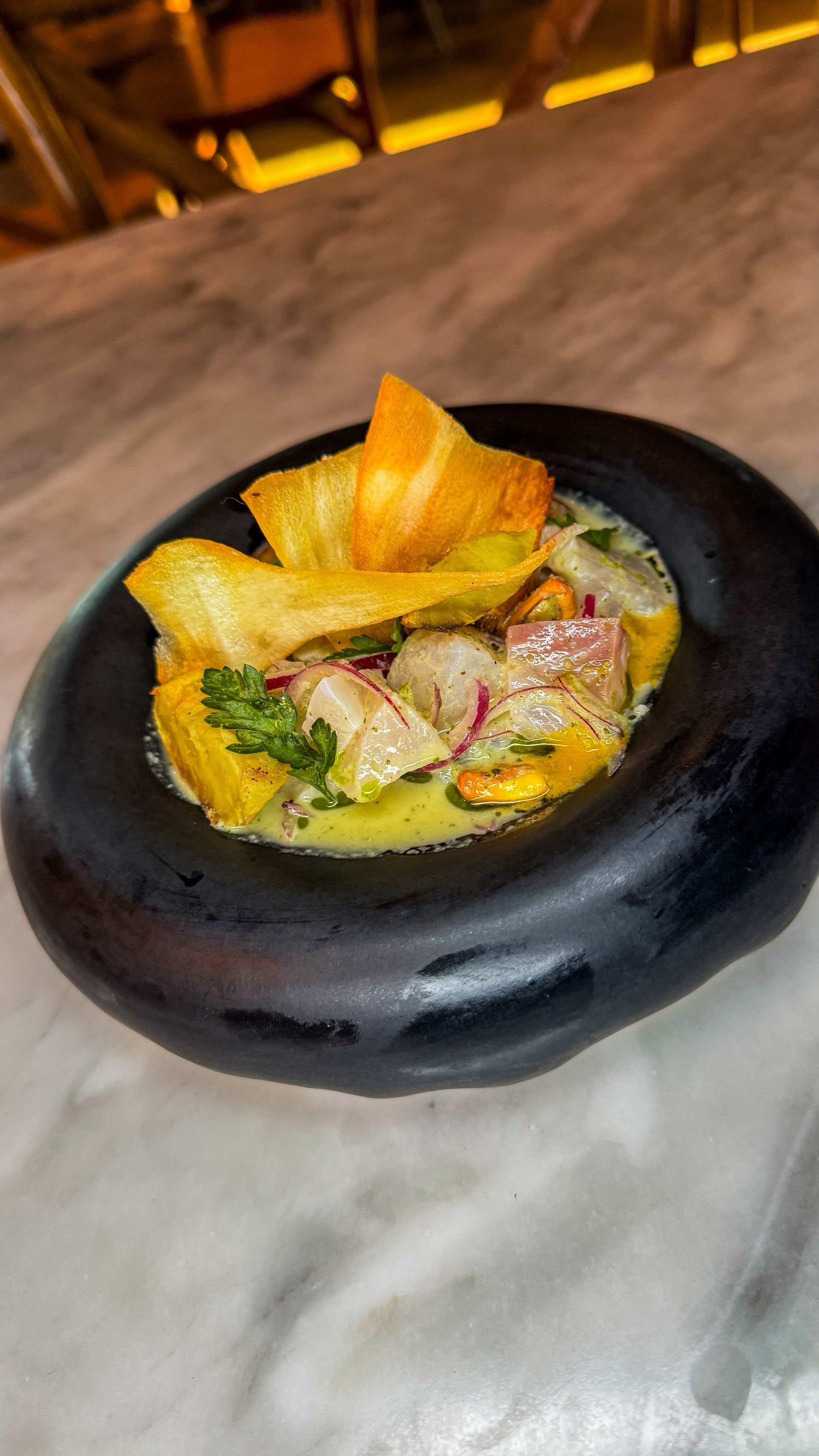
Sea Bass Ceviche: Starting Bright
When I'm ordering several small plates, I usually like to begin with something fresh.
The Sea Bass Ceviche was the obvious choice.
Mixela prepares it Peruvian-style, and it's exactly the kind of dish that makes sense as the beginning of a meal built around sharing.
Ceviche relies on balance.
The fish needs to be fresh.
The citrus needs enough acidity to transform the texture without overwhelming everything.
The seasoning needs to complement rather than bury the seafood.
When those elements work together, ceviche has an incredible ability to wake up your palate.
That's what happened here.
The sea bass was bright and fresh, with the acidity giving every bite energy. It felt refreshing rather than heavy and immediately set up the rest of the meal.
There's also an interesting connection between ceviche and Chef Gian Franco's background.
Growing up in Venezuela means Latin American seafood preparations are part of his culinary vocabulary, while his years working with Italian crudo and Japanese sushi give him multiple ways of thinking about raw and lightly prepared fish.
You can feel those overlapping perspectives throughout Mixela's seafood program.
The ceviche isn't trying to become sushi.
The sushi isn't trying to become ceviche.
Each preparation maintains its identity.
But there's a shared respect for fresh seafood running through both.
That becomes even clearer with the next dish.
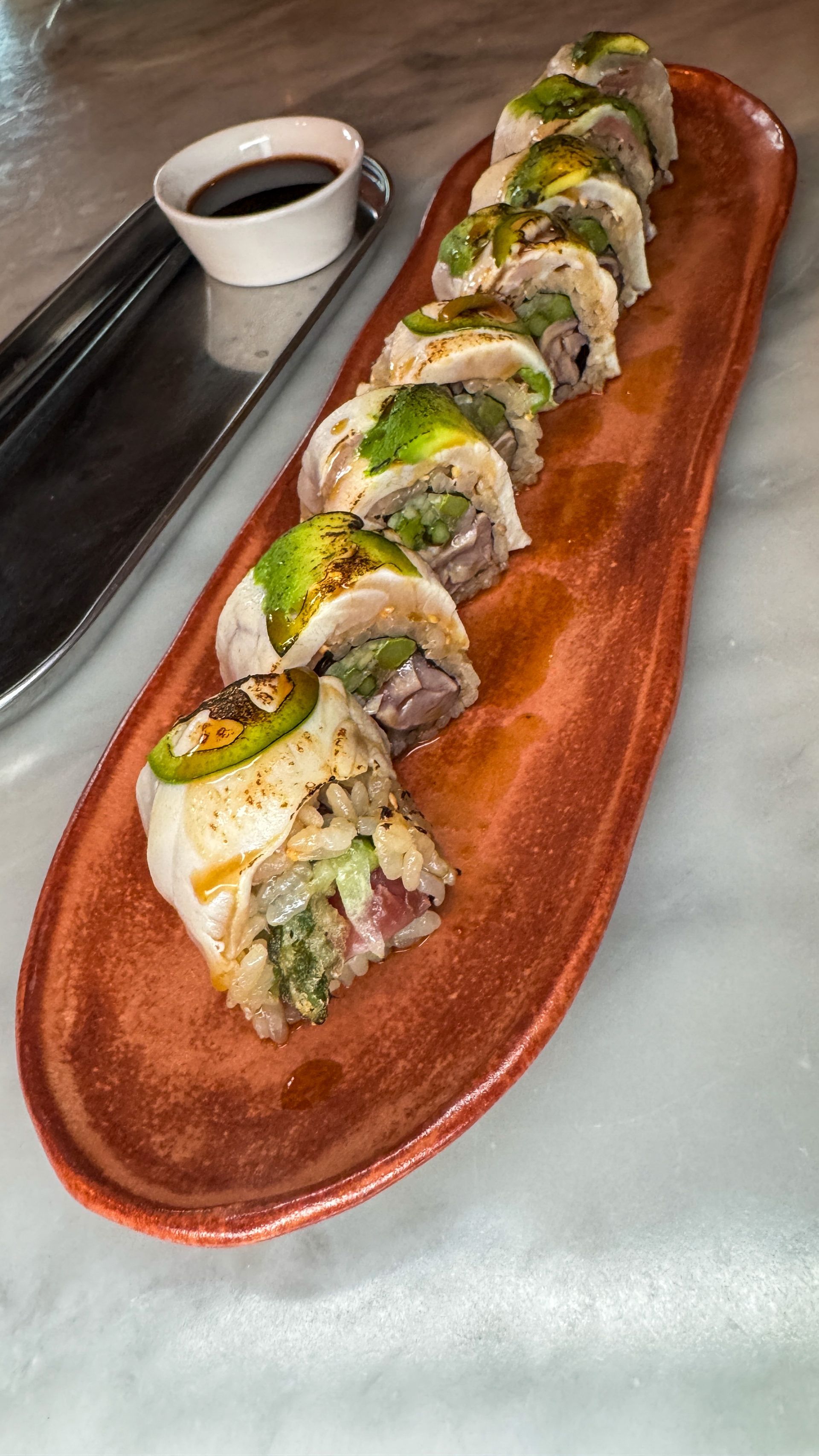
Yellowtail Aburi & Tuna Maki: Where the Global Influences Really Click
If I had to choose one plate to explain Mixela's concept to someone who had never heard of the restaurant, the Yellowtail Aburi & Tuna Maki might be it.
This is where Chef Gian Franco's experience with Japanese cuisine becomes impossible to miss.
The dish pairs lightly torched yellowtail with tuna maki, fermented yuzu, and jalapeño.
There are several layers happening here.
Yellowtail already has a rich, almost buttery quality. Aburi preparation adds another dimension by lightly torching the surface, introducing a subtle warmth and a little extra depth while keeping the fish delicate.
Then you have the tuna maki.
Fermented yuzu brings citrus and complexity.
Jalapeño brings heat.
Together, you get richness, acidity, umami, citrus, and spice moving through the same plate.
What I appreciated was that it didn't feel like someone was adding ingredients simply to make sushi "different."
The flavors had purpose.
The fermented yuzu in particular provides the kind of brightness that works naturally with rich fish, while the jalapeño creates another bridge between Japanese technique and the Latin American ingredients that appear elsewhere on the menu.
It's exactly the type of dish that demonstrates why Mixela's refusal to stay within one cuisine works.
Chef Gian Franco spent roughly a decade working as an executive sushi chef in Monaco. Sushi isn't a side project here.
It's part of his culinary identity.
And that experience shows.
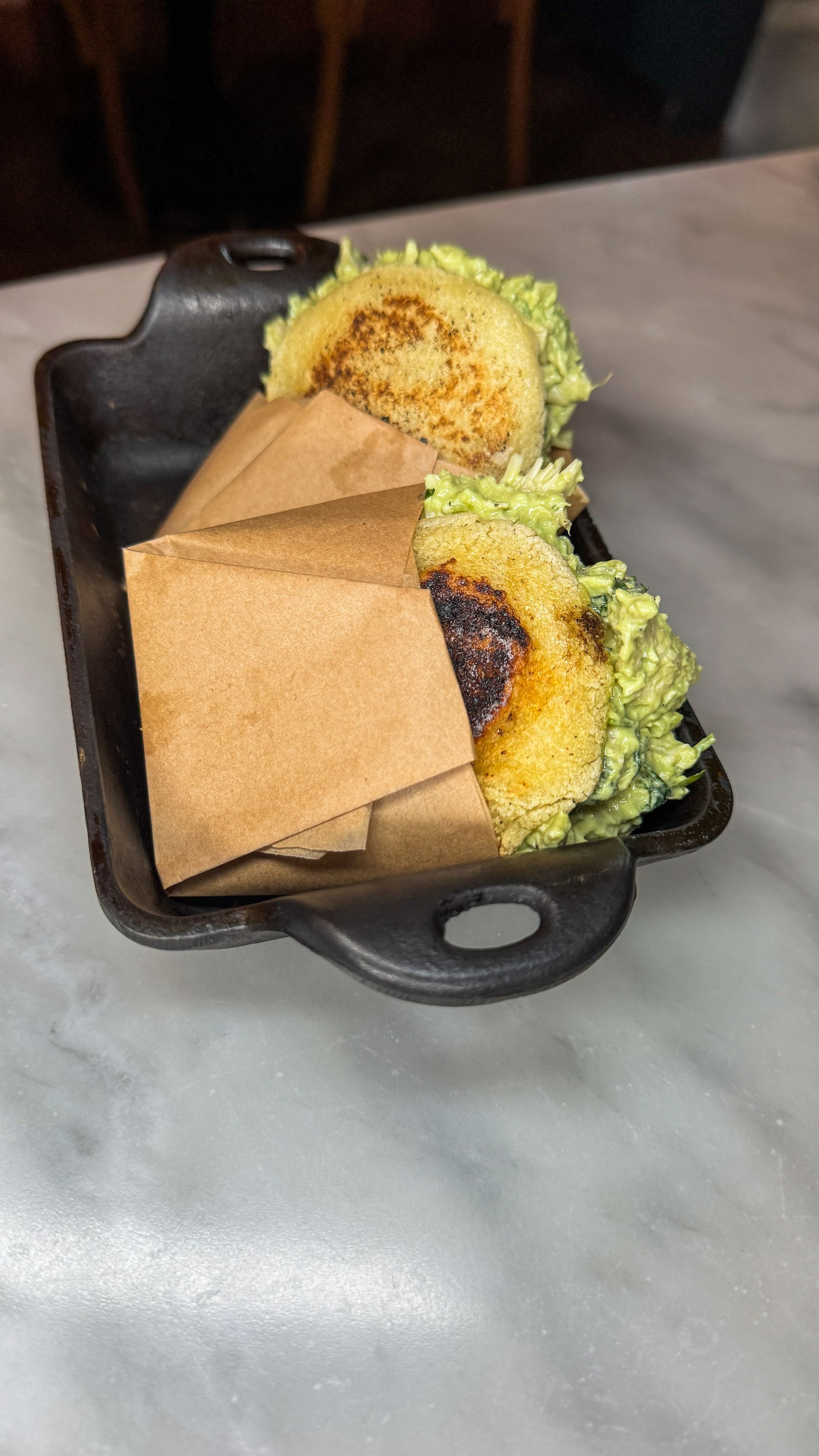
Arepas with Chicken and Avocado: A Taste of Venezuela
After two seafood-forward dishes, the arepas provided a completely different kind of comfort.
These were filled with diced chicken and avocado, a combination closely connected to the Venezuelan reina pepiada style of arepa.
If you've never had an arepa before, it's a cornmeal cake that can be grilled or cooked on a flat surface and then split open to hold different fillings.
In Venezuela, they're an everyday food.
Breakfast.
Lunch.
Dinner.
The fillings can change endlessly.
The version I tried was filled with diced chicken and avocado.
After the brightness of the ceviche and the precision of the yellowtail and tuna, the arepa felt almost grounding.
Warm corn.
Creamy avocado.
Savory chicken.
Simple ingredients that didn't need much explanation.
And I think that contrast is important.
A globally inspired restaurant can easily fall into the trap of making every dish complicated.
Mixela doesn't.
Some plates are intricate.
Others are intentionally comforting.
The arepas sit firmly in the second category.
They also make the restaurant feel more personal.
This isn't just a chef showing off techniques learned in high-end European kitchens.
It's also someone putting a food connected to home on the menu.
That combination of professional experience and personal memory is really the heart of Mixela.
Pork Short Rib Bites: The Dish That Isn't Going Anywhere
Menus at Mixela change with the seasons.
But apparently there are some dishes guests simply won't let disappear.
The Pork Short Rib Bites are one of them.
I'm perfectly fine with that.
These were easily one of the dishes I kept thinking about after the meal.
The pork is rich and deeply savory, exactly what you want from a slow-cooked piece of meat. But richness alone can become exhausting quickly, especially during a meal where you're trying several different plates.
That's where the pickled onions and chimichurri come in.
I'm a sucker for a great chimichurri.
And this is exactly why.
The herbs and acidity cut through the richness of the pork and immediately brighten the entire bite.
The pickled onions add another layer of acidity and a little textural contrast.
Suddenly, something that could have been extremely heavy becomes balanced enough that you want another piece.
And then another.
It's also a good example of how Mixela builds flavor.
The kitchen isn't afraid of richness.
It simply knows how to counter it.
Acid.
Fresh herbs.
Pickles.
Citrus.
Those elements appear repeatedly across the menu because they're what allow small plates to work together over the course of a longer meal.
I completely understand why this dish has earned a more permanent place on a menu designed to change.
Some dishes become part of a restaurant's identity.
The Pork Short Rib Bites feel like one of those.
Why Small Plates Are the Best Way to Experience Mixela
Mixela makes the most sense when you don't think about ordering an appetizer and entrée.
That's not really the point.
This is a restaurant built around discovery.
The small-plate format allows you to move through different parts of Chef Gian Franco's culinary background without committing your entire meal to one style of food.
You can start in Peru with ceviche.
Move toward Japan with yellowtail and tuna.
Jump to Venezuela with an arepa.
Then finish with pork and chimichurri.
At a traditional restaurant, that sequence might feel completely disconnected.
Here, it becomes the experience.
Sharing also makes the meal more social.
Everyone gets a bite.
Everyone develops favorites.
Someone orders another dish.
A bottle of wine appears.
Dinner stretches longer than expected.
That is exactly the type of dining experience Mixela seems designed to encourage.
It's not about rushing through courses.
It's about sitting around the table and seeing where the menu takes you.
The Aperitivo Philosophy Behind the Restaurant
Understanding the word "aperitivo" helps explain another layer of Mixela.
In Italy, aperitivo isn't simply happy hour.
It's a social ritual.
You have a drink.
You eat something small.
You talk.
You relax.
Maybe that turns into dinner.
Maybe it doesn't.
The point is less about consuming a specific amount of food and more about creating space for people to gather.
Mixela adapts that philosophy to Phoenix.
You don't necessarily have to arrive hungry enough for a huge meal.
You can stop in for a glass of wine and a plate.
But if the evening naturally turns into five more dishes, that works too.
That's one of the things I find appealing about the restaurant.
There's flexibility built into it.
And because the space itself is small, that aperitivo philosophy feels especially natural.
You're close to the kitchen.
You're close to the bar.
You're close to the people you're dining with.
It creates the kind of environment where conversation becomes as much a part of the evening as the food.
A Hidden Gem Without Trying Too Hard to Be One
"Hidden gem" gets thrown around constantly in food content.
Sometimes the restaurant isn't hidden at all.
Sometimes it's a massive operation everyone already knows.
Mixela actually fits the description much better.
The restaurant is relatively small.
It's tucked along 24th Street rather than sitting in one of Phoenix's giant dining developments.
From the outside, you could easily drive past without realizing how ambitious the food inside actually is.
And once you're in, there's an intimacy that makes the discovery feel personal.
That's exactly the type of restaurant I enjoy highlighting.
Not because larger restaurants can't be great.
But because places like Mixela demonstrate how much creativity can exist inside a tiny neighborhood space.
The kitchen itself is extremely compact.
That limitation could be a weakness.
Instead, they've turned it into part of the restaurant's identity.
Fresh ingredients come in frequently.
Menus change.
The kitchen adapts.
Creativity becomes necessary.
And diners benefit from it.
Who Should Try Mixela?
Mixela isn't necessarily the restaurant I'd recommend to someone who wants a huge steak and potatoes dinner where everyone orders their own plate.
That's not what it's trying to be.
This is a restaurant for people who enjoy trying things.
If you like sharing plates, you'll have fun here.
If you like sushi and crudo, there's plenty to explore.
If you're interested in Latin American flavors but also enjoy European and Asian influences, the menu becomes especially interesting.
It's also a great date-night restaurant.
The smaller room makes the experience intimate without feeling formal, and the small-plate format gives you something to talk about throughout dinner.
I could also see this being an ideal place to meet a friend for wine.
Start with one glass and a plate.
See what happens.
That's very much the Mixela philosophy.
What I Would Order on a First Visit
Because the menu changes seasonally, I wouldn't walk into Mixela with an exact checklist months in advance.
That defeats part of the purpose.
Instead, I'd build the meal around categories.
Start with something raw.
Try a ceviche or crudo.
Add something from the sushi side of the menu.
Order an arepa or another Latin American small plate.
Then add something warm and richer to finish the savory portion of the meal.
If the Pork Short Rib Bites are available, those are an easy recommendation.
And definitely order something to drink.
For my visit, the sangria was exactly what I wanted alongside the meal.
Most importantly, don't rush.
The restaurant makes much more sense when you allow the meal to unfold.
Why Mixela Feels Different from Typical "Fusion" Restaurants
The word fusion can sometimes make diners skeptical.
Understandably so.
At its worst, fusion cooking combines ingredients simply because the combination sounds unusual.
Mixela works because the influences aren't manufactured.
They're biographical.
Venezuela explains the arepas.
Italy explains the technique and aperitivo philosophy.
Years in Monaco explain the European hospitality influence.
A decade working with sushi explains the Japanese side of the menu.
Mexico is part of Valentina's story.
Arizona is where everything finally comes together.
Once you understand that, the restaurant's seemingly eclectic menu becomes remarkably coherent.
It's not a chef asking, "What cuisines can I combine?"
It's a chef asking, "What food represents me?"
That's a much stronger foundation.
Why Seasonality Makes Returning Worthwhile
One downside of writing about a restaurant like Mixela is that I can't promise every dish I tried will still be there when you visit.
But that's also one of the reasons I want to return.
Seasonal restaurants give diners a reason to revisit.
Instead of knowing exactly what you'll order before walking through the door, there's an element of discovery.
What fish came in?
What produce is available?
What dish has Chef Gian Franco been experimenting with?
What's disappeared?
What's become permanent because customers refused to let it leave?
That evolving relationship between chef, ingredient, and diner is part of what makes independent restaurants interesting.
Mixela isn't locked into a corporate menu that needs to remain identical across hundreds of locations.
It can change.
And it does.
A Restaurant That Reflects the People Behind It
The more I think about my meal at Mixela, the less I think about it as a "global restaurant."
That description is accurate, but incomplete.
Mixela is personal.
It's a restaurant that reflects the people behind it.
Chef Gian Franco Brugaletta's life has crossed continents.
Venezuela.
Italy.
Monaco.
The United States.
His career has moved between Italian cooking, seafood, sushi, and other global influences.
Valentina Huerta brings her own Mexican heritage, European experience, culinary education, and hospitality background into the restaurant.
Mixela gives those experiences somewhere to coexist.
That's why the restaurant doesn't feel confused despite serving food from very different traditions.
The people behind it aren't confused about who they are.
The menu simply reflects that identity.
And that's what ultimately makes Mixela compelling.
Why Mixela Belongs on Your Phoenix Restaurant List
Phoenix has become an increasingly interesting city for restaurants precisely because places like Mixela exist.
There are plenty of restaurants where you can immediately understand the concept from the sign outside.
Sometimes that's exactly what you want.
Other times, I want a restaurant that makes me curious.
Mixela does that.
It makes you wonder how a Peruvian-style ceviche will sit beside Japanese aburi.
Then it shows you.
It lets a Venezuelan arepa follow sushi without apologizing for the transition.
It serves rich pork with bright chimichurri and somehow makes the entire progression feel natural.
It changes its menu rather than insisting every ingredient remain available year-round.
And it does all of that inside a small neighborhood restaurant where you can actually see the chef cooking your dinner.
That's special.
Final Thoughts on Mixela
Mixela is exactly the kind of Arizona hidden gem I love discovering.
It's small enough to feel personal but ambitious enough to keep surprising you.
It's globally inspired without feeling gimmicky.
It's chef-driven without feeling pretentious.
And it's seasonal without making the experience inaccessible.
My meal moved from sangria and sea bass ceviche to yellowtail aburi, tuna maki, Venezuelan arepas, and those incredibly rich Pork Short Rib Bites with pickled onions and chimichurri.
On paper, that sounds like several different restaurants.
At Mixela, it feels like one.
That's the entire point.
This restaurant is a mix of cultures, experiences, techniques, memories, and ingredients brought together through the perspective of Chef Gian Franco Brugaletta and Valentina Huerta.
And because the menu changes with the seasons, my experience is really only one snapshot of what Mixela can be.
Your visit might look completely different.
I actually hope it does.
Because that's what makes a restaurant like this worth returning to.
If you love discovering restaurants that are doing something a little different, enjoy sharing small plates, or simply want to experience one of Midtown Phoenix's more personal dining concepts, put Mixela on your list.
Come curious.
Order a few things you recognize.
Order a few things you don't.
Share everything.
And definitely leave room for whatever catches your eye next.
FOR MORE LOCAL BITES